Skip to content
emailrules.today

Embeddable mark

lush.com

This is the live mark for lush.com, drawn from the same lookups as the full result. Paste it anywhere that renders an image and it re-checks itself.
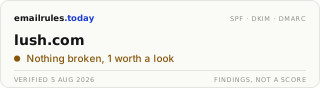
Email authentication check for lush.com — emailrules.today

320×88, plain SVG, no webfont and nothing fetched. It renders the same on a dark page as a light one.

HTML

<a href="https://emailrules.today/check/lush.com">
  <img src="https://emailrules.today/badge/lush.com.svg"
       alt="Email authentication check for lush.com — emailrules.today"
       width="320" height="88" loading="lazy">
</a>

The width and height are there so the page does not reflow while the image loads. Keep the link — a mark that asserts without a way to check it is the thing this site exists to argue against.

Markdown

[![Email authentication check for lush.com — emailrules.today](https://emailrules.today/badge/lush.com.svg)](https://emailrules.today/check/lush.com)

For a README, a Notion page or anything else that speaks Markdown.

Image URL

https://emailrules.today/badge/lush.com.svg

If your tool only takes a URL. You lose the link to the result, so put one next to it.

What it says is what the check says. The wording on the mark is the wording on the result page, so the two can never disagree in front of a client. If lush.com has something to fix, the mark says so — in red, on your page. There is no score on it and there never will be.

Hotlink it — that is what it is for. emailrules.today caches the check for six hours and serves it stale while it refreshes, so a page with real traffic costs one DNS lookup rather than one per reader.

FAQ

Awkward questions

Who is this actually for?

People who ship email and are too busy to re-read every PDF: week-one marketers, lifecycle/CRM, deliverability, multi-country ops, DTC brands, agencies — on Klaviyo, Mailchimp, Braze, HubSpot, SFMC, or something else. Pick your tool and geos so product-specific pages only appear when they match. EU and UK are first-class filters. Not for people who sell tools about email and need a fake score to demo.

Why only ~40 rules? Isn’t that… thin?

On purpose. A wall of 400 undated “best practices” is how you look busy and still get burned. Every page needs a primary source we actually read. Thin and checkable beats fat and folklore. Europe, bulk inbox rules, measurement honesty, and protocol topics like BIMI/DMARC policy are on the shelf when we can cite them — not every Member State and not every vendor myth. Coverage map lists what we still refuse to invent.

Is this legal advice?

No. If it were, you’d have a billable hour and a longer PDF. This is a dated operator reference written by an email geek. Confirm anything high-stakes with counsel who knows your facts. Same for “will this make me compliant?” — no tool does that. Lawyers and judges do. We say what the sources say and what to do first on Monday.

Why no trust score out of 100?

Because we refuse to invent a number you can’t audit. Fake scores sell seed tests and panic. You get findings, dates, and links. If that feels less exciting than a red dial, good — you’re not the red-dial customer.

Why should I trust you more than my ESP’s blog?

ESPs sell seats. Seed-score vendors sell fear. AI invents citations when nobody watches. We sell nothing today — no pixels, no placement scores, no affiliate — so we can say when a tool is the problem. A human verifies, dates, and corrects in public. Tools may help draft; they do not ship unsourced claims. Check the primary links. Fail that test and leave.

Do I need an account?

No. Filters live in this browser and the URL. Share the link. That’s it. Accounts come later only if they earn it — not so we can nurture you about email.

I’m an agency. Where’s multi-client mode?

We tried a client-name CRM on the setup card. It made the product feel like work before it felt useful. Role filters + copy link + one-page brief (optional PDF title) is enough for now. Complexity comes back when the free shelf is habit, not before.

Is the quiet changelog a bug?

No. Quiet means nothing material moved. We don’t invent urgency so the homepage looks “alive.” Sticky risks still show what usually needs a person when the market is still.